Alpine Plants and Climate Change: Tracking Community Shifts in Yosemite National Park
Brooke L. Wallasch, California Polytechnic State University, San Luis Obispo
2025 WMRC Mini-Grant Recipient

During the 2025 field season, this project proposed to establish 10 transects following the Global Observation Research Initiative in Alpine Environments (GLORIA) downslope protocol on Mt. Gibbs in Yosemite National Park to begin the acquisition of a long-term vegetation monitoring dataset with 5-year survey intervals. The data from the initial surveys helped to identify baseline trends in species richness with elevation and soil moisture on Mt. Gibbs to inform future hypotheses regarding the long-term data set. This project also quantified inter-observer error on Mt. Gibbs to inform future analysis of the Yosemite downslope surveys.
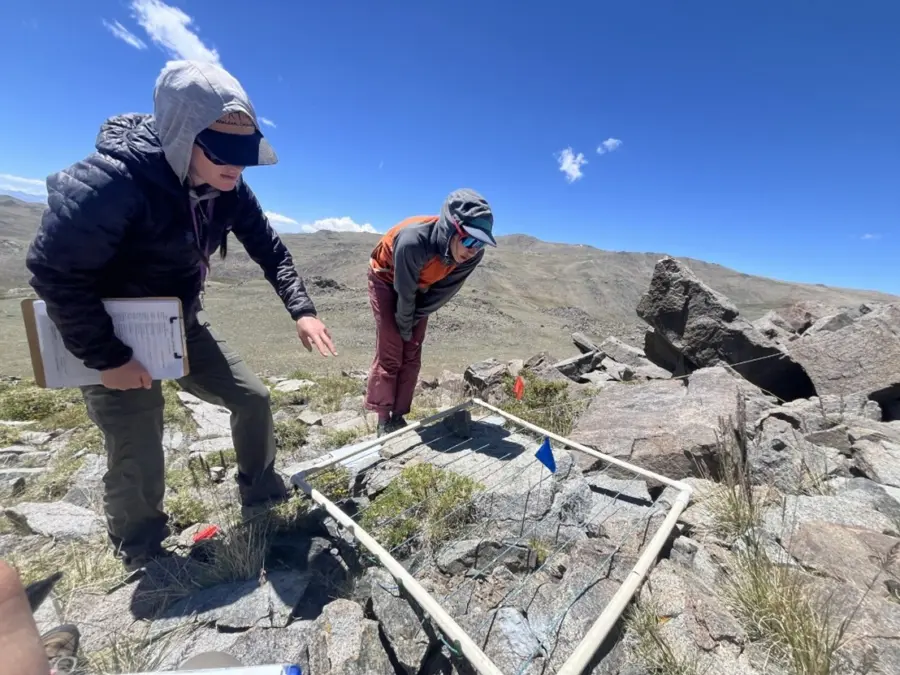
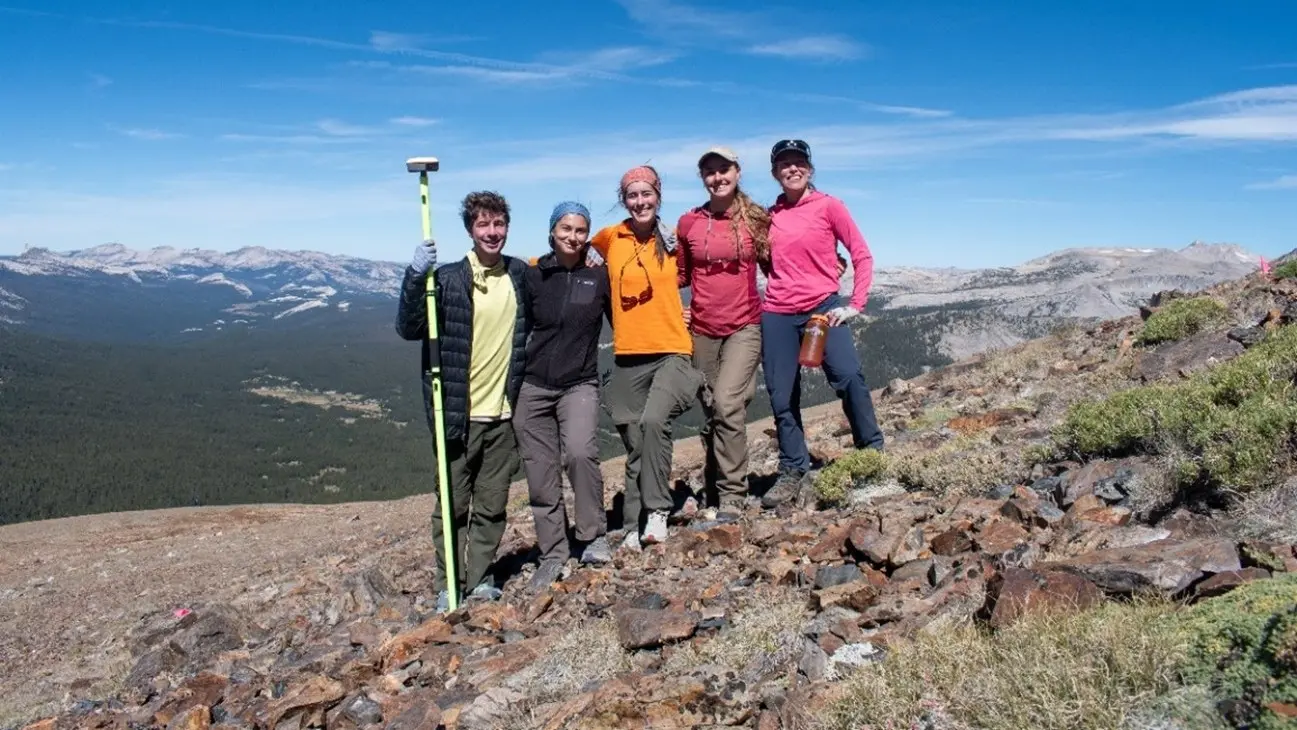
In April 2025, Wallasch trained a crew of three undegraduate students (Annalise Burrows, Madeleine Colbert and Michael Gottlieb). During the first week of the field season, Wallasch and her crew volunteered with the Great Basin chapter of GLORIA Great Basin where they stayed at Crooked Creek Station thanks to generous support from the White Mountain Research Center Mini-Grant. Here, they completed vegetation surveys on White Mountain Peak and other nearby peaks in the Inyo National Forest. This event brought together many botanists from a diverse set of careers, offering a fruitful networking opportunity. During this event, Annalise Burrows connected with botanist Dylan Neubauer who shared her insights regarding Castilleja hybridization in the White Mountain area, which has since led Annalise to pursue this topic for her senior project at Cal Poly San Luis Obispo. From July 29th to August 8th, Wallasch and her crew successfully established 10 new vegetation monitoring transects on Mt. Gibbs. During these surveys, Annalise, Madeleine and Michael noticed that many of the cushion-like alpine plant species were in poor health. To quantify their observations, they identified a research question, developed a sampling protocol, collected data, analyzed the data using R, and communicated their results in an oral presentation as part of the 2025 Frost Summer Undergraduate Research Program Symposium at Cal Poly San Luis Obispo and will be presented again at the California Native Plant Society conference in February 2026, allowing these students to fully engage in the scientific process.
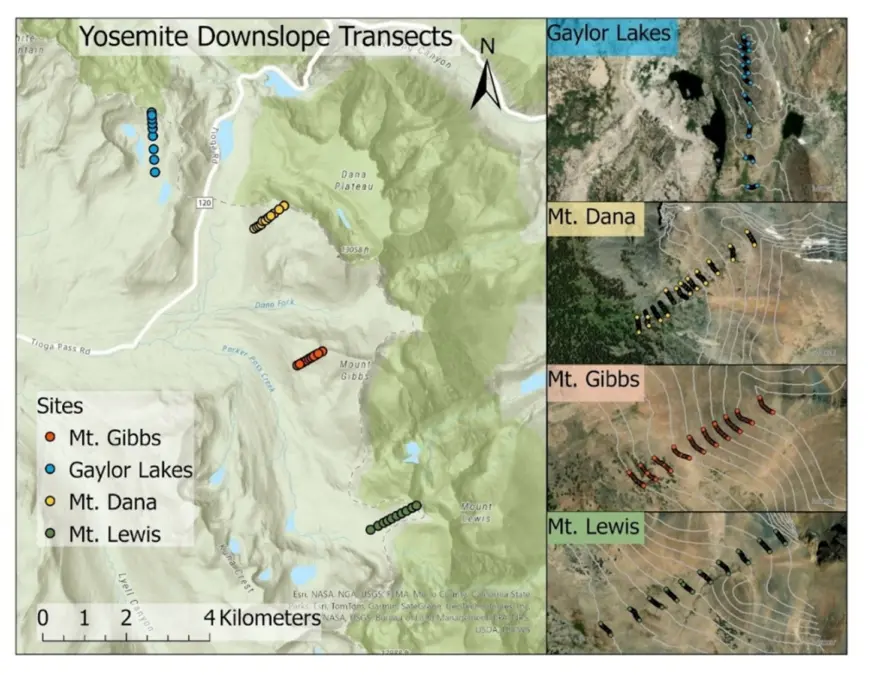
To finalize this project, Wallasch cleaned and analyzed the data from Mt. Gibbs, as well as three previously surveyed sites (Mt. Dana, Mt. Lewis and Gaylor Lakes; Fig. 1) between September 2024 and September 2025, culminating in her master’s thesis which she defended on September 11, 2025. This oral defense was available via Zoom to provide access for National Park Staff, and a written version is currently available in the Cal Poly Digital Commons where it can be accessed by National Park staff, with digital copies sent directly to several NPS staff members to further communicate key findings.
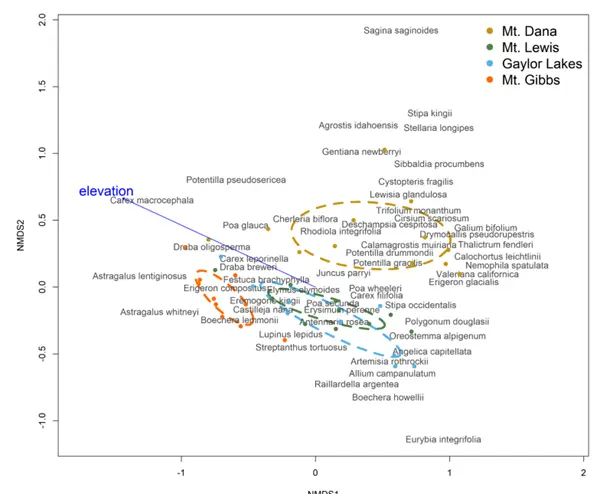
The results of this project revealed that community composition was similar across all four sites with similar species appearing in high abundance, and 36-60% of variation in species composition explained by elevation at each site (Fig. 2). Inter-observer error (differences between survey teams resulting from different observer teams) was higher on Mt. Dana (20%) than Mt. Lewis (10%) and increased with higher vegetation cover at both sites. The establishment of these 41 transects marks the beginning of a long-term vegetation monitoring data set. These transects will be resurveyed every 5 years with continued collaboration between Cal Poly San Luis Obispo and the National Parks Service, strengthening this partnership and offering future opportunities for undergraduate field work and research. The information acquired in this study will inform future hypotheses related to this long-term data set, aid National Park staff in making informed management decisions when conserving alpine communities, and inform interpretations of change over time for decades to come.